

- Home
- Specimen Search
- Images
- Flora Projects
- Agency Floras
- Dynamic Floras
-
Additional Websites
- New Mexico Flores
- Plant Atlas Project of Arizona (PAPAZ)
- Southwest Colorado Wildflowers
- Vascular Plants of the Gila Wilderness
- Consortium of Midwest Herbaria
- Consortium of Southern Rocky Mountain Herbaria
- Intermountain Region Herbaria Network (IRHN)
- Mid-Atlantic Herbaria
- North American Network of Small Herbaria (NANSH)
- Northern Great Plains Herbaria
- Red de Herbarios del Noroeste de México (northern Mexico)
- SERNEC - Southeastern USA
- Texas Oklahoma Regional Consortium of Herbaria (TORCH)
- Resources
|
Erigeron bellidiastrum Nutt.
 |
|
|
Family: Asteraceae
Western Daisy Fleabane, more...western fleabane
 Max Licher |
Annuals (or biennials-), 3.5-30(-50) cm; taprooted. Stems erect to ascending, hirsutulous (hairs upcurved), usually eglandular, sometimes minutely glandular (var. arenarius). Leaves basal (sometimes persistent) and cauline or mostly cauline; blades linear to oblanceolate or spatulate, 10-60(-80) × 2-6(-9, or 15) mm, margins entire, lobed, or pinnately dissected, faces sparsely strigose, eglandular. Heads 1-12 usually in diffuse arrays (from branches beyond midstems or sometimes clustered distally). Involucres 3-5 × 5-7(-11) mm. Phyllaries in 2-3(-4) series, hispidulous, minutely glandular. Ray florets 22-70 (some positioned among inner phyllaries); corollas white, often with abaxial lilac midstripe, drying white to bluish, 4-7.5 mm, laminae not coiling or reflexing. Disc corollas 2.2-3 mm (throats indurate and inflated). Cypselae 1-1.6(-1.8) mm, 2-nerved, faces sparsely strigose; pappi: outer cartilaginous crowns, inner of 15-18 bristles. Erigeron bellidiastrum is recognized by its annual duration, upcurved hairs of the stem, relatively few rays, 1-seriate pappi, and by some ray florets consistently produced between the phyllaries, the mature cypselae of these held in place as the phyllaries reflex at maturity.
FNA 2006, Martin and Hutchins 1980, Kearney and Peebles 1969, Heil et al 2013 Duration: Annual Nativity: Native Lifeform: Forb/Herb General: Annual or biennial herb, 3.5-30 cm tall from a taproot; stems erect to ascending and covered with hirsutulous, upcurved hairs. Leaves: Mostly alternate along the stem, often also with a cluster of basal leaves persisting into adulthood; blades linear to oblanceolate or spatulate, 1-6 cm long and 2-6 mm wide, though generally at the narrow end of that range; leaf margins usually entire but occationally with a pair of shallow lobes or teeth; leaf surfaces sparsely strigose, without any glands Flowers: Flower heads showy and radiate, with white to purple rays and yellow discs, solitary or arranged in diffuse arrays of up to 12 flower heads near the ends of branches; involucres hemispheric, 3-5 mm high by 5-7 mm wide, the phyllaries in 2-3 series, hispidulous, and minutely glandular; ray flowers 22-70 per head, 4-8 mm long, the corollas white, often with lilac midstripe beneath, and drying to a purplish color; disc corollas 2-3 mm long, yellow. Fruits: Achenes 1-2 mm long, 2-nerved, the faces sparsely strigose; topped with an outer pappus a cartilaginous crown and an inner pappus of 15-18 bristles. Ecology: Found in open habitats in deep, loose sand, shrublands or woodlands, from 3,500-6,500 ft (1067-1981 m); flowers May-September. Distribution: Widespread in the west, from AZ to TX and MEX, north to MT and SD. Notes: Erigeron is a difficult genus, with many similar looking species distingushed from each other by subtle and obscure characters. A hand lens is necessary for field ID, and making a collection is generally advisable in order to have any confidence in a determination. Identify the genus as a whole from its characteristic daisy-like flowers with white to pale purple rays and yellow centers (although a few species have extremely small rays); involucres with 2-5 series of phyllaries, all about the same length (subequal); and tufts of bristles on the tops of the seeds. E. bellidiastrum is generally found in the middle elevation ranges; look for it in sandy habitats. The range is large but based on herbarium collections it does not seem to be particularly common in most parts of its range. Because of this it is worthy of collection. Appears quite similar to the common and widespread E. divergens; however it is generally an annual (E. divergens is annual to perennial), and can be distinguished by the upcurved hairs on the stems, which can be seen with a hand lens (E. divergens has stem hairs that usually diverge, or stick straight out from the stem). The flower heads on this species are also a little smaller, with 5-7 mm wide involucres compared to E. divergens, which has 7-11 m wide involucres. Ethnobotany: Used ceremonially be the Ramah Navajo. Etymology: Erigeron means Early-Old-Man, as named by Theophrastus; bellidiastrum means that it resembles Bellis, the genus of Edglish daisies. Synonyms: None Editor: SBuckley 2010, AHazelton 2017 |
 Max Licher  Max Licher  Max Licher  Patrick Alexander  Patrick Alexander  Patrick Alexander  Megan Swan  Megan Swan  Tropicos.org Copyright (c) Missouri Botanical Garden 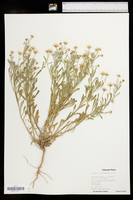  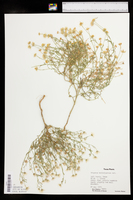  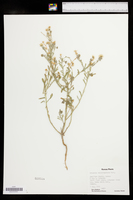 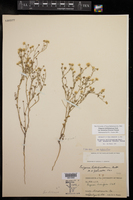 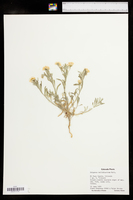 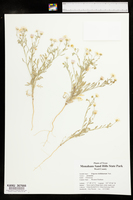 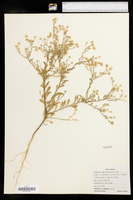 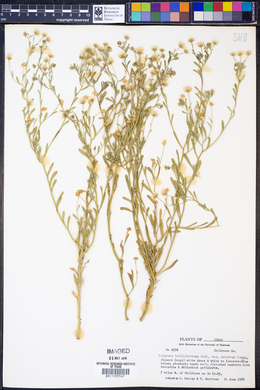 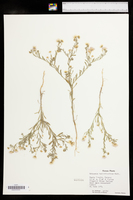 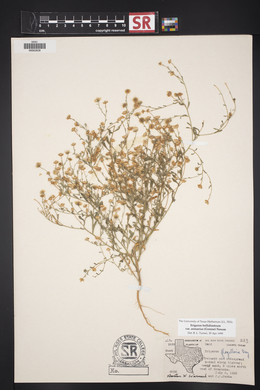 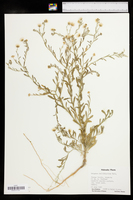 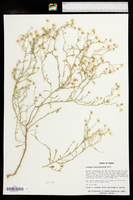 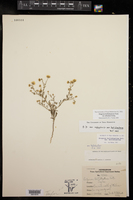 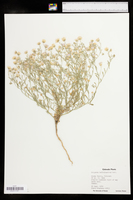 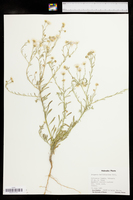 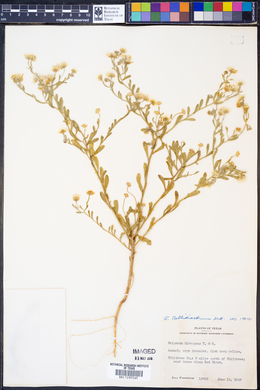   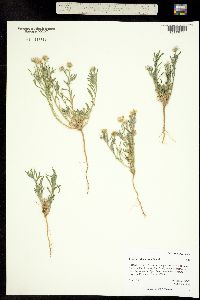 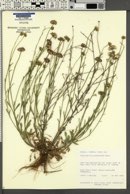  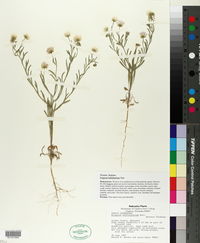  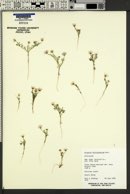 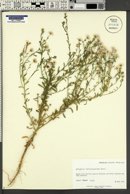 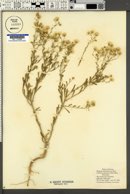 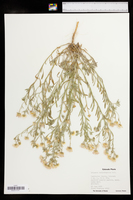 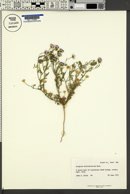 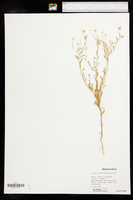 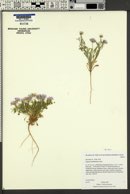 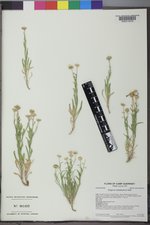 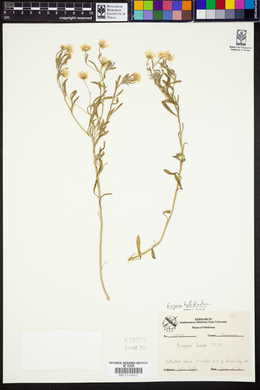      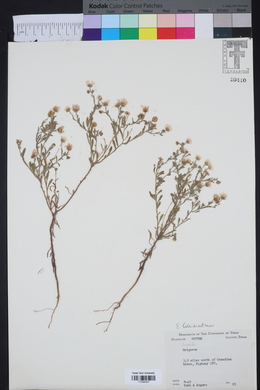   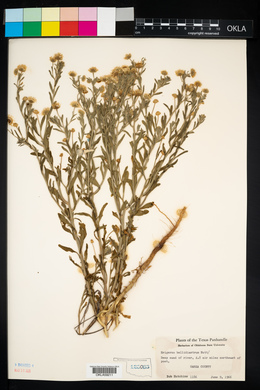  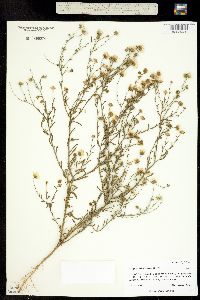 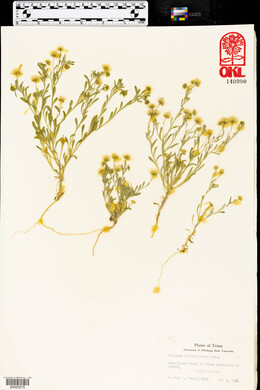 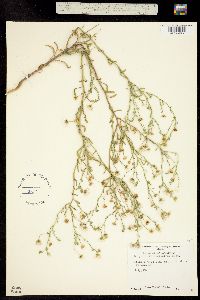 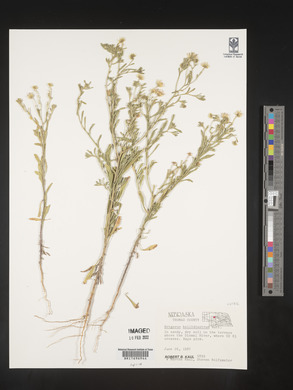    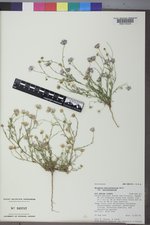 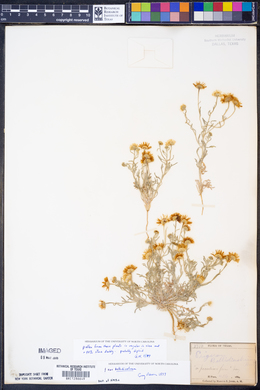        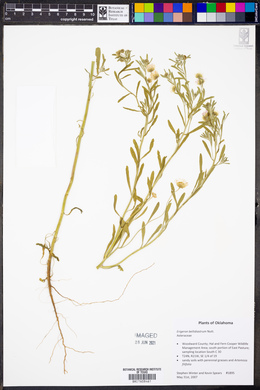 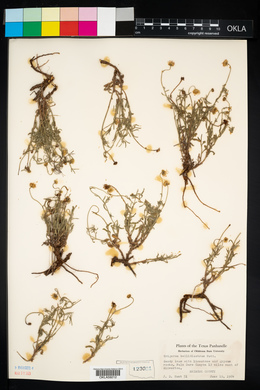 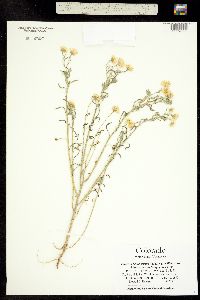  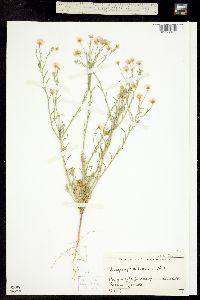 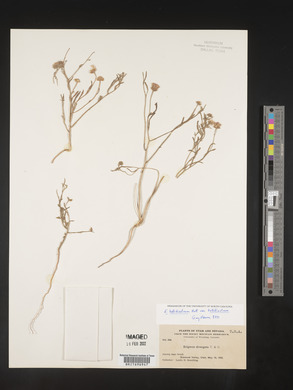       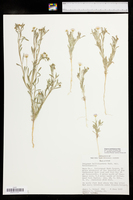  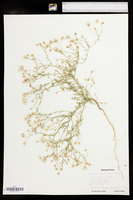 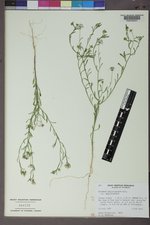 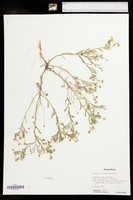  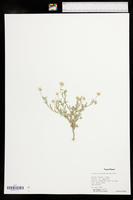 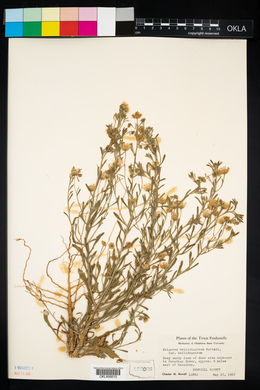 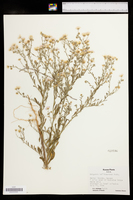 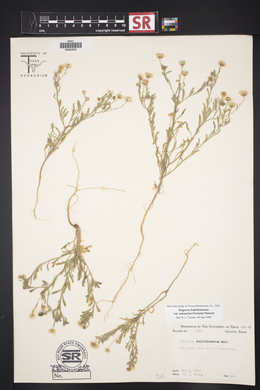 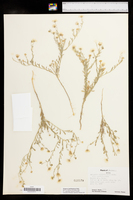 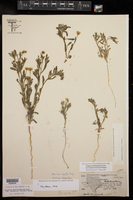 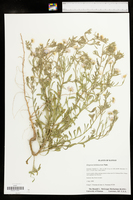 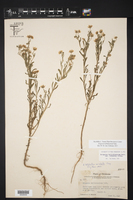 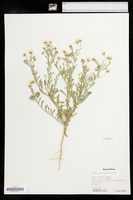  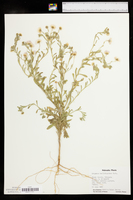 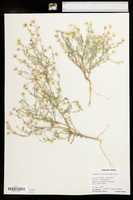 |
|


Development supported by National Science Foundation Grants
(DBI 9983132,
BRC 0237418,
DBI 0743827,
DBI 0847966)
Powered by Symbiota
Powered by Symbiota